top of page

Oltre un ragionevole dubbio

.jpeg)


Language


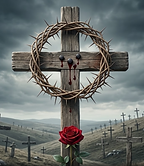


The Creator’s Standard vs. 55 Traditions of Men
"Scripture knows no middle ground between obedience and disobedience," Thomas replied directly. "Let us test the four fundamental questions every believer faces."
Truth seekers
Is it ok?
The evening air in the study was cool, but the atmosphere around the heavy wooden table was charged. A small group, calling themselves the Truth Seekers, sat with open scrolls and Bibles spread wide.
At the head of the table sat Thomas, an elder who had spent decades testing every church tradition against the raw, unvarnished text of Scripture.
Across from him sat Marcus, a sincere young believer raised in mainstream church traditions, accompanied by Sarah, who was eager to measure her life solely by what was written.
Thomas laid his hand flat on an open copy of the Torah.
"We are here for one reason," Thomas began, his voice low and firm. "Not to validate what we grew up believing, but to bow to what is written. Belief does not determine truth. If our answer rejects what is written, it is either born of ignorance or driven by rebellion."
Marcus leaned forward, a legal pad filled with questions in front of him. "Those are heavy words, Thomas. Ignorance or rebellion? Isn't there middle ground for sincere intent?"
"Scripture knows no middle ground between obedience and disobedience," Thomas replied directly. "Let us test the four fundamental questions every believer faces."
Part I: The Four Questions
Thomas pointed to the first line on Marcus’s pad.
1. Is it ok to go to church on Sunday?
"If you go to fellowship, that is your choice," Thomas said. "But if you treat Sunday as God’s holy day or a substitute for the Sabbath, the answer is no. Yehovah never sanctified the first day of the week. Man changed the day; God never did."
2. Is it ok to work on Saturday?
"No. Exodus 20:8–10 leaves no room for debate: 'Remember the Sabbath day, to keep it holy. Six days you shall labor... but the seventh day is the Sabbath of Yehovah your God. In it you shall do no work.'on the seventh day is to break the Fourth Commandment."
3. Is it ok to eat anything with washed hands?
"No. Physical water cannot make swine, shellfish, or scavengers clean," Sarah chimed in, turning to Leviticus 11. "Yeshua’s debate in Matthew 15 was over man-made ceremonial handwashing before eating bread—not declaring unclean animals clean to eat."
4. Did Christ rise on Sunday morning?
"No. Yeshua gave only one sign of His Messiahship: three full days and three full nights in the heart of the earth (Matthew 12:40). A Friday evening burial to Sunday morning sunrise is barely 36 hours. When the women arrived while it was yet dark on the first day of the week, the tomb was already empty (John 20:1). He had already risen at the end of the Sabbath, fulfilling the 72 hours."
Part II: The Fifty Excuses
Marcus looked down at his notes, tracing the ten common arguments he had heard in sermons for years.
"Whenever people are confronted with these four truths," Marcus admitted, "they bring out the same ten justifications.
Are all ten of these really just excuses to replace God's written truth with human belief?"
"Every single one," Thomas stated. "They fall squarely into those same two categories: Ignorance—being misled by tradition and lack of knowledge—or Rebellion—knowing what Yehovah commanded and refusing to obey."
Together, the group went down the list, holding each claim up to the light of the Word:
1. "Didn't I pray the Sinner's Prayer and accept Jesus?"
The Truth: A verbal prayer without obedience is meaningless. Yeshua said, "Not everyone who says to Me, 'Lord, Lord,' shall enter the kingdom of heaven, but he who does the will of My Father in heaven" (Matthew 7:21).
"2, Aren't we under grace, not the Law?"
The Truth: Grace pardons past sin; it does not grant permission to break commandments. Paul wrote, "Do we then make void the law through faith? Certainly not! On the contrary, we establish the law" (Romans 3:31).
3, "Don't I go to church, give tithes, and do good works?"
The Truth: External religious routines cannot replace Torah obedience. Yeshua warned that those who practice lawlessness will be turned away, regardless of their works (Matthew 7:23).
4. "Doesn't God know my heart and accept my sincerity?"
The Truth: The heart is deceitful (Jeremiah 17:9). Worshiping according to human tradition while ignoring God's commands is vain worship (Matthew 15:9).
5. "Isn't baptism or church membership my golden ticket?"
The Truth: Rituals without a life of covenant obedience carry zero weight before the Almighty (Matthew 3:8–10).
6. "Isn't the Old Testament only for the Jews?"
The Truth: Scripturally, there is one Law for the native-born and the stranger grafted in (Exodus 12:49; Romans 11).
7. "Can't I worship God however I choose, as long as it's from the heart?"
The Truth: Yehovah explicitly commanded never to adopt pagan customs or add to His instructions (Deuteronomy 12:30–32).
8.. "Didn't Paul teach that all foods are clean and days don't matter?"
The Truth: Peter warned that Paul's letters are easily twisted by the lawless (2 Peter 3:15–17). Paul himself walked in obedience to the Law (Acts 21:24).
9. "Doesn't God love everyone unconditionally, so He won't exclude anyone who tries?"
The Truth: The gate to life is narrow and strict, and few find it because few submit to His terms (Matthew 7:13–14).
10. "Didn't the Holy Spirit reveal new truth to our denomination?"
The Truth: Yehovah does not change (Malachi 3:6). The Spirit will never contradict the written Torah.
11. "Didn't Jesus fulfill the Law so I don't have to keep it?"
The Truth: Fulfilling the Law means setting the proper example of how to keep it, not abolishing it. Yeshua explicitly stated, "Do not think that I came to destroy the Law or the Prophets... Till heaven and earth pass away, one jot or one tittle will by no means pass from the law till all is fulfilled" (Matthew 5:17–18).
12. "Isn't love all that matters now under the New Covenant?"
The Truth: Scripture defines love by obedience to the Father's commandments, not by human emotion. John wrote, "For this is the love of God, that we keep His commandments. And His commandments are not burdensome" (1 John 5:3; see also 2 John 1:6).
13. "Wasn't Sabbath changed to Sunday after the resurrection?"
The Truth: Man has no authority to alter the Creator's set times and days. The seventh-day Sabbath remains an everlasting sign between God and His covenant people (Exodus 31:16–17), and there is zero Scriptural command authorizing a shift to Sunday.
13, "Isn't keeping the commandments trying to earn salvation by works?"
The Truth: Salvation is a gift received through faith, but obedience is the evidence of true faith. Faith without works is dead (James 2:20), and commandment-keeping is the continuous expression of a redeemed life, not a means to purchase grace (Revelation 14:12).
15. "Aren't those dietary laws and feast days just shadows that passed away?"
The Truth: Paul noted that the Biblical feasts are a shadow of good things to come, meaning they point to future prophetic events rather than expired ones (Colossians 2:16–17). Yeshua and the early believers kept the Torah's feasts and dietary standards, and they remain the eternal appointments of the Almighty (Leviticus 23:14, 21, 31, 41).
16. "Didn't the Law end when Jesus died on the cross?"
The Truth: Messiah’s death paid the penalty of sin (death), not the obligation to stop sinning. Sin is defined as the transgression of the Law (1 John 3:4). If the Law ended at the cross, then sin no longer exists, making the gift of grace irrelevant (Romans 6:1–2).
17. "Aren't the commandments just burden-filled Old Testament bondage?"
The Truth: Yahweh’s Torah was given as a guide for life, freedom, and blessing. David declared, "I will walk at liberty, for I seek Your precepts" (Psalm 119:45), and James referred to the royal commandment as the "perfect law of liberty" (James 1:25). Bondage comes from sin, not obedience.
18 ."Didn't Peter's vision in Acts 10 mean we can eat any animal now?"
The Truth: Peter himself explained the meaning of the vision in Acts 10:28: God showed him that he should not call any man common or unclean. The sheet filled with animals was an object lesson about accepting Gentile believers into the covenant, not a instruction to ignore the Creator’s dietary laws.
19. "Isn't my pastor or church denomination responsible for teaching me the truth?"
The Truth: Every individual will stand before the judgment seat of Messiah for themselves (2 Corinthians 5:10). The Bereans were praised because they searched the Scriptures daily to see if what the apostles taught aligned with the written Word (Acts 17:11). Human leaders cannot shield you from accountability.
20. "Didn't Paul rebuke the Galatians for trying to keep the Law?"
The Truth: Paul rebuked the Galatians for turning to a false gospel that claimed legalistic adherence to man-made traditions or circumcision could earn justification (Galatians 2:16, 3:1–3). He was opposing legalism as a path to salvation, not rejecting Torah obedience as the outcome of faith.
21. "Can't we celebrate traditional holidays like Christmas and Easter as long as we mean well?"
The Truth: God explicitly commands His people not to adopt the religious practices of surrounding pagan nations to worship Him (Deuteronomy 12:4, 30–31). Sincerity does not override direct instructions on how the Father desires to be honored.
22. "Doesn't the Letter of the Law kill, while the Spirit gives life?"
The Truth: The letter kills when used as a system of self-righteous condemnation without faith. The Holy Spirit’s role is to write the Father's Law directly onto our hearts so that we can walk in His statutes (Ezekiel 36:26–27; Jeremiah 31:33). The Spirit leads into obedience, never lawlessness.
24. "Isn't the New Covenant completely different from the Old Covenant?"
The Truth: The New Covenant is not a brand-new set of rules, but a renewed delivery system. The exact definition of the New Covenant in Jeremiah 31:31–33 and Hebrews 8:8–10 is the same Torah put into the mind and written on the heart, accompanied by the forgiveness of sins through Messiah's blood.
25. "Didn't Jesus break the Sabbath when He healed people on that day?"
The Truth: Yeshua never broke the Sabbath command; He broke human, Pharisaic traditions that added restrictive rules God never commanded. If Messiah had broken the Sabbath, He would have sinned and failed as the unblemished Lamb (1 John 3:5; Deuteronomy 13:1–3).
26. "Isn't it impossible for anyone to actually keep all the commandments?"
The Truth: God does not command what is impossible, nor does He set His people up to fail. While human perfection in our own strength is impossible, John affirms that His commandments are not burdensome (1 John 5:3), and Deuteronomy 30:11–14 states that the command is not too hard or far off, but near so that it can be done through a heart yielded to Him.
27. "Didn't the Jerusalem Council in Acts 15 say Gentiles only need to keep four rules?"
The Truth: The four prohibitions given in Acts 15:20 were immediate requirements to break away from pagan temple worship and enter the community. James explicitly added that Gentile believers would learn the rest of the Torah every Sabbath in the synagogues (Acts 15:21).
28. "Isn't Jesus our Sabbath rest now, making a physical day obsolete?"
The Truth: While Messiah provides spiritual rest from sin, He never annulled the creation ordinance of the seventh day. Hebrews 4:9 confirms, "There remains, therefore, a Sabbath-keeping for the people of God." Spiritual fulfillment never abolishes a literal commandment.
29. "Didn't Jesus clean all foods in Mark 7:19?"
The Truth: The context of Mark 7 was a dispute over ceremonial handwashing traditions created by the elders, not Levitical dietary laws (Mark 7:2–3). Yeshua clarified that eating food with unwashed hands does not defile a person spiritually; He did not reclassify unclean animals as food.
30 "Aren't we saved by faith alone, so keeping commandments is unnecessary?"
The Truth: Faith saves, but genuine faith produces obedience. Abraham was justified by faith, yet God praised him because he "obeyed My voice and kept My charge, My commandments, My statutes, and My laws" (Genesis 26:5). True faith works through obedience, while faith without works is dead (James 2:24–26).
31. "Didn't the veil torn in the temple signify that the Law was done away with?"
The Truth: The torn veil signified open access to the Holy of Holies through the blood of Messiah, removing the barrier between God and man (Hebrews 10:19–22). It demonstrated that the sacrificial barrier was overcome, not that the moral and holy standard of the Almighty had been dismantled.
32. "Isn't judging someone by what they eat, drink, or observe forbidden in Colossians 2:16?"
The Truth: Paul told believers not to let outsiders judge them for keeping the Biblical feasts, new moons, and Sabbaths. The verse warns against letting pagan philosophy criticize believers for celebrating God's appointed times, not against keeping the commandments (Colossians 2:8, 16–17).
33. "Didn't Paul call the Law a 'ministry of death' in 2 Corinthians 3?"
The Truth: Paul called the condemnation written on stone a ministry of death, because the Law convicts the sinner of death without providing the Spirit to overcome it. The Law itself is "holy, and the commandment holy and just and good" (Romans 7:12); the Spirit provides the power to walk in that holiness.
34. "Can't we just focus on the 'weightier matters' like mercy and justice, and ignore the minor details?"
The Truth: Yeshua rebuked the religious leaders for neglecting justice and mercy, but He explicitly commanded that smaller details must not be left undone. He said, "These you ought to have done, without leaving the others undone" (Matthew 23:23).
35. "Isn't the Law of Christ different from the Law of Moses?"
The Truth: Messiah walked in perfect submission to the Father's Torah and taught others to do the same. The "Law of Christ" is the Torah fulfilled and applied through love and the Holy Spirit, not a replacement set of rules that contradicts the Father's voice (John 7:16; Galatians 6:2).
36. "Doesn't the doctrine of eternal security mean my walk won't forfeit my kingdom inheritance?"
The Truth: Scripture repeatedly warns that practicing unrighteousness excludes a person from the Kingdom. Paul warned believers directly: "Do not be deceived: neither fornicators, nor idolaters... nor thieves... will inherit the kingdom of God" (1 Corinthians 6:9–10; see also Revelation 22:14–15).
37. "Didn't Paul say, 'All things are lawful for me'?"
The Truth: Paul was quoting a popular slogan of the licentious Corinthian culture only to refute it. He immediately countered their mindset twice by stating that not all things are beneficial and that he would not be mastered by anything (1 Corinthians 6:12, 10:23). Paul never taught that breaking God's written commandments was permissible.
38. "Wasn't circumcision abolished in the New Testament?"
The Truth: Physical circumcision performed merely as a outward ritual for salvation without a heart surrendered to God was rejected. Paul clarified that "circumcision is nothing and uncircumcision is nothing, but keeping the commandments of God is what matters" (1 Corinthians 7:19). True covenant membership has always required the circumcision of the heart expressing itself through obedience (Deuteronomy 30:6; Romans 2:28–29).
39. "Didn't Jesus do away with the distinction between clean and unclean in Acts or Romans?"
The Truth: Scripture explicitly states that the distinction between clean and unclean animals will remain intact all the way through Messiah's return and judgment. Isaiah prophesied that those consuming swine's flesh and abominable things at His coming will meet destruction (Isaiah 66:15–17), confirming that God's creation design for clean and unclean never changes.
40. "Isn't the Law only for those who want to be under a curse?"
The Truth: The Law itself is not a curse; the curse of the Law is the death penalty resulting from disobeying it (Galatians 3:10–13). Messiah redeemed believers from the penalty of death through His sacrifice so that they could walk in obedience, not so they could freely remain in the sin that brought the curse in the first place.
41. "Didn't the Apostles change the day of worship because Jesus rose on the 'first day of the week'?"
The Truth: The phrase "first day of the week" (mia ton sabbaton) in the Greek text of the Gospels and Acts refers to the counting of the weeks leading to Shavuot (Pentecost), an explicitly Torah-defined season (Leviticus 23:15–16). The apostles continued to assemble, preach, and keep the seventh-day Sabbath throughout the entire Book of Acts (Acts 13:42–44, 17:2, 18:4).
42. "Can't I rely on my spiritual gifts, prophecies, or miracles as proof I am in right standing?"
The Truth: Spiritual manifestations are not proof of righteousness. Yeshua declared that many will say on that day, "Lord, Lord, have we not prophesied in Your name, cast out demons in Your name, and done many wonders in Your name?" and He will declare to them, "I never knew you; depart from Me, you who practice lawlessness!" (Matthew 7:22–23).
43. "Doesn't the Book of Hebrews say the Old Covenant is obsolete and passing away?"
The Truth: Hebrews 8:13 addresses the sacrificial system and Levitical priesthood operating at the physical temple, which was rendered obsolete by Messiah's superior Melchizedek priesthood and ultimate sacrifice. The moral and behavioral standards of the Torah—the definition of sin itself—were never declared obsolete; rather, they are written upon the heart in that very same New Covenant (Hebrews 8:10).
44. "Didn't Jesus declare all meats clean when He said what enters the mouth doesn't defile a man?"
The Truth: In Matthew 15:11, Yeshua was addressing the Pharisaic ritual of washing hands (netilat yadayim), not what Leviticus defines as food. Unclean animals were never considered "food" (broma) by any Israelite audience, and Yeshua concluded His instruction by explicitly stating, "to eat with unwashed hands does not defile a man" (Matthew 15:20).
45. "Isn't keeping the Torah putting a yoke of bondage on Gentile believers?"
The Truth: The "yoke" referred to by Peter in Acts 15:10 was the man-made oral traditions and Pharisaic legalism that demanded perfection for justification, not the Father's commandments. John confirms that God's commandments are not burdensome (1 John 5:3), and Yeshua stated, "My yoke is easy and My burden is light" (Matthew 11:30) as He modeled perfect Torah obedience.
46. "Doesn't the Holy Spirit inside me replace the need for written commandments?"
The Truth: The explicit purpose of the Holy Spirit is to cause believers to keep the written Word. Yahweh promised, "I will put My Spirit within you and cause you to walk in My statutes, and you will keep My judgments and do them" (Ezekiel 36:27). The Spirit and the written Torah are in complete harmony; any spirit that leads away from the written Law is not the Holy Spirit.
47. "Didn't Paul teach that Christ is the end of the Law?"
The Truth: The Greek word used in Romans 10:4 for "end" is telos, which means the ultimate target, goal, or outcome—not termination. Messiah is the goal to which the Law leads, revealing its true purpose and embodying its righteousness, so that everyone who believes may walk as He walked (Romans 8:3–4; 1 John 2:6).
48, "Isn't salvation purely a matter of personal relationship, not rules?"
The Truth: Scripturally, a genuine relationship with the Creator is defined by keeping His instructions. John writes explicitly, "Now by this we know that we know Him, if we keep His commandments. He who says, 'I know Him,' and does not keep His commandments, is a liar, and the truth is not in him" (1 John 2:3–4). Relationship and obedience cannot be separated.
49. "Didn't God change His standards for the New Testament era?"
The Truth: Yahweh explicitly declares, "For I am the Lord, I do not change" (Malachi 3:6), and James notes that with Him "there is no variation or shadow of turning" (James 1:17). Defining sin as transgression of the Law (1 John 3:4) means His moral standard for righteousness remains immutable across every generation.
50. "Can't we assume that majority church consensus over centuries reflects God's will?"
The Truth: Messiah made it clear that majority consensus is rarely the indicator of truth. He warned, "Enter by the narrow gate; for wide is the gate and broad is the way that leads to destruction, and there are many who go in by it" (Matthew 7:13). Truth is measured by the written Word, not by popular practice or human tradition (Mark 7:8).
51. "Isn't the Torah only relevant for Israel, and I'm a Gentile Christian?"
The Truth: Through faith in Messiah, wild olive branches (Gentiles) are grafted into the cultivated olive tree of Israel (Romans 11:17–24). There is not one standard for native Israel and another for grafted-in believers; there is one body, one faith, and one Law for all who belong to the Creator (Numbers 15:15–16; Ephesians 2:12–13).
52. "Can't I rely on my conscience to guide my actions instead of strict rules?"
The Truth: Human conscience can be seared, deceived, and culturally conditioned (1 Timothy 4:2; Titus 1:15). Proverbs warns, "He who trusts in his own heart is a fool" (Proverbs 28:26). The written Word of God, not human intuition, is the only objective benchmark for right and wrong.
53."Didn't Jesus sum up the whole Law into two commands, replacing all the others?"
The Truth: Loving God with all your heart and loving your neighbor as yourself (Matthew 22:37–40) are the foundation principles upon which the entire Torah hangs, not replacements for it. Commandments 1–4 show us how to love God, and commandments 5–10 show us how to love our neighbor.
54. "Isn't keeping the Biblical Feasts an outdated shadow of the past?"
The Truth: The Father’s appointed times (Moedim) in Leviticus 23 are called "everlasting statutes." They outline the entire redemptive plan of salvation—spring feasts pointed to Messiah’s first coming, and fall feasts point directly to His second coming, the final judgment, and the Kingdom reign (Zechariah 14:16).
55. "Won't God forgive me anyway, even if I continue to knowingly ignore His Law?"
The Truth: Willful, persistent sin after receiving the knowledge of the truth carries severe judgment. Hebrews warns, "For if we sin willfully after we have received the knowledge of the truth, there no longer remains a sacrifice for sins, but a certain fearful expectation of judgment" (Hebrews 10:26–27). Presumption is not faith.
The Bottom Line
Silence fell over the room as the weight of the Scriptures settled upon the table.
Marcus folded his legal pad, looking up at Thomas and Sarah. The fog of church dogma had cleared, leaving only the unbending standard of the Creator.
"So it comes down to how we walk," Marcus said quietly.
"It always has," Thomas replied, closing his Bible. "Your life is your answer. It is the testimony you present before the Judge. If your walk relies on any of these ten excuses, the answer your life gives is either ignorant or rebellious.
Set aside human preferences, discard the doctrines of men, and walk strictly in the written commandments of the Father and the path of Yeshua. That is what it means to be a true seeker of Truth."
The Truth: God does not command what is impossible, nor does He set His people up to fail. While human perfection in our own strength is impossible, John affirms that His commandments are not burdensome (1 John 5:3), and Deuteronomy 30:11–14 states that the command is not too hard or far off, but near so that it can be done through a heart yielded to Him.
bottom of page