top of page

Oltre un ragionevole dubbio

.jpeg)


Language


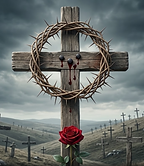


Are you least in the kingdom?
"Do not think that I have come to abolish the Law or the Prophets; I have not come to abolish them but to fulfill them." "Therefore anyone who sets aside one of the least of these commands and teaches others to do the same will be called least in the kingdom of heaven, but whoever practices and teaches these commands will be called great in the kingdom of heaven."
To demonstrate that the Law remains fully in effect and to examine the precise spiritual status of those who deflect or teach against it, we must analyze Matthew 5:17–19 line by line, paying strict attention to the structural logic and terminology Yeshua used.
Part 1: Proving the Law is Still in Effect (Matthew 5:17–18)
Matthew 5:17
"Do not think that I have come to abolish the Law or the Prophets; I have not come to abolish them but to fulfill them."
The Primary Prohibitive Command ("Do not think..."): Yeshua anticipates human deflection and immediately forbids the conclusion that the Law is done away with.
Abolish (Katalyo): Greek for to tear down, annul, or destroy. Yeshua explicitly denies that He came to annul the Torah.
Fulfill (Pleroo): Often misinterpreted as "ending" a law. In first-century Hebrew idiom, to "fulfill" the Law means to teach it correctly, bring it to its fullest meaning, and obey it fully. Setting "fulfill" against "abolish" shows He came to establish its true execution, not terminate it.
Matthew 5:18
"For truly I tell you, until heaven and earth disappear, not the smallest letter, not the least stroke of a pen, will by any means disappear from the Law, until everything is accomplished."
The Duration Clause ("Until heaven and earth disappear..."): Yeshua ties the expiration date of the Law to a physical, objective benchmark: the existence of the cosmos. As long as the sky is above and the earth is below, the Law stands without modification.
Absolute Precision ("Yod" and "Tittle"): A Yod (י) is the smallest Hebrew letter; a tittle is the small decorative stroke/serif that distinguishes one Hebrew letter from another. Yeshua guarantees that not even the smallest microscopic detail of the written text will pass away.
"Until everything is accomplished": Tying back to the full renewal of creation and God's ultimate kingdom (Revelation 21:1–2, where the new heaven and new earth finally appear).
Part 2: The Spiritual Status of Those Who Deflect or Break Commandments (Matthew 5:19)
Matthew 5:19
"Therefore anyone who sets aside one of the least of these commands and teaches others to do the same will be called least in the kingdom of heaven, but whoever practices and teaches these commands will be called great in the kingdom of heaven."
Setting Aside / Breaking (Lyo): The Greek verb means to loosen, untie, break, or declare non-binding. This is the exact definition of deflection—taking a command of God and declaring it no longer applies or is "loosened."
The Consequences inside vs. outside the Kingdom:
"Least in the Kingdom": Those who personally break or deflect instructions and teach human traditions instead are diminished in rank and authority within the Kingdom framework.
"Great in the Kingdom": Reserved exclusively for those who both do (practice) and teach the instructions of the Torah.
Part 3: The Exclusion Threshold (Matthew 5:20 & Matthew 7:21–23)
To answer the second part of your point—how deflection leads to exclusion from the Kingdom—we look at how Yeshua closes this passage and applies it at the Final Judgment.
Matthew 5:20
"For I tell you that unless your righteousness surpasses that of the Pharisees and the teachers of the law, you will certainly not enter the kingdom of heaven."
The Problem of the Pharisees: The Pharisees were infamous not for keeping the Torah, but for deflecting it by adding human traditions and setting aside God's actual commands (as exposed in Mark 7:8–13).
Surpassing Righteousness: True righteousness requires submitting to God's written commands as given, rather than hiding behind religious traditions or redefinitions.
Matthew 7:21–23
"Not everyone who says to me, 'Lord, Lord,' will enter the kingdom of heaven, but only the one who does the will of my Father who is in heaven.
Many will say to me on that day, 'Lord, Lord, did we not prophesy in your name and in your name drive out demons and in your name perform many miracles?' Then I will tell them plainly, 'I never knew you. Away from me, you who practice lawlessness!'"
The Warning: Calling Yeshua "Lord" and performing religious works in His name is insufficient if one rejects His Father's instructions.
Lawlessness (Anomia): The Greek word means literally "anti-Torah" or "without law." Deflecting, loosening, or stripping away God's law places a person in the category of anomia. At the judgment seat, those who practice and advocate lawlessness are explicitly shut out of the Kingdom.
Teaching against obedience to God’s commandments is a betrayal of His Word because it directly undermines His authority in four ways:
It Erases the Definition of Sin: Scripture explicitly defines sin as "the transgression of the law" (1 John 3:4). If you throw out the Law, you destroy the only boundary that defines right from wrong.
It Defies Yeshua’s Direct Warning: The Messiah specifically warned that anyone who breaks the commandments and teaches others to do so will be called the least in the Kingdom (Matthew 5:19).
If "least" literally meant a low-ranking person inside the Kingdom, Yeshua would be saying that a carnal, commandment-breaking believer is somehow spiritually superior to John the Baptist. That makes no sense.
But if "least" means the person who hasn't even entered yet (the mortal believer still waiting on the outside), the phrase makes perfect sense.
bottom of page