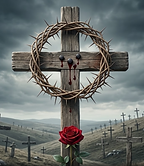
Oltre un ragionevole dubbio
Appointed times
With God or against Him
Truth seekers
Nailed to the cross
Language
Do Not Add To Or Remove List

The passage referenced is Matthew 5:17–19, where Yeshua directly addresses the enduring validity of the Torah (the Law) and the Prophets:
The morning sun broke across the narrow alleyways of the Subura, Rome’s crowded quarter, casting a golden hue over rows of weathered brick apartments. Inside a quiet courtyard shaded by a climbing vine, a small group of believers gathered around a wooden table.
Two men sat opposite each other, the tension between them as palpable as the Roman heat.
On the left was Marcus, a Gentile believer who had recently left the imperial temples to follow the Messiah. On his plate rested a portion of stewed lentils, wild greens, and coarse barley bread. His companion, Lucius, had brought a roast shoulder of lamb purchased from the bustling macellum down near the forum.
Marcus pushed his bowl forward, his brow furrowed with distress. "Lucius, brother, how can you eat that meat with a clean conscience? You know as well as I that nearly every beast sold in the public stalls of Rome was dedicated to Jupiter before it ever hung in the butcher's shop. To eat it is to defile the soul with idols."
Lucius smiled gently, shaking his head. "The idols of this city are nothing, Marcus. Dust and stone. The earth is the Lord’s, and the fullness thereof. The beast was made by the Creator, not Caesar’s priests."
"Then what of tomorrow?" Marcus pressed, leaning across the cedar table. "Thursday is my appointed day to afflict my soul before God. I will fast from dawn until the evening star appears, just as the holy men have taught. Yet you sit here eating your three meals without regard for the sacred days of fasting!"
"And who appointed Thursday for you?" Lucius replied, his voice calm. "The scriptures command no such fast on the fifth day of the week. God gave us His Sabbaths and His appointed seasons, not the traditions of the city councils or the Pharisees. To me, every ordinary day is alike—a day to be lived unto the Lord with thanksgiving."
The table grew quiet. Other believers looked down at their plates, wondering which brother walked in true righteousness. Did devotion demand total abstinence from market meats and the strict keeping of weekly fasts, or was faith meant to be lived in liberty?
From the back of the room, an elder stood up. In his hands rested a letter, its seal bearing the signature of the Apostle Paul, recently arrived from Corinth.
"Brothers," the elder said gently, stepping into the center of the courtyard. "Hear the words of Paul sent to our very assembly."
He unrolled the parchment, tracing the lines of ink with his thumb.
"Receive the one who is weak in faith, but not to disputes over doubtful things. For one believes he may eat all things, but he who is weak eats only vegetables. Let not him who eats despise him who does not eat, and let not him who does not eat judge him who eats; for God has received him."
The elder paused, looking directly at Marcus and Lucius before continuing:
"One person judges one day above another; another judges every day alike. Let each be fully convinced in his own mind. He who observes the day, observes it to the Lord; and he who does not observe the day, to the Lord he does not observe it. He who eats, eats to the Lord, for he gives God thanks; and he who does not eat, to the Lord he does not eat, and gives God thanks."
The words hung in the quiet morning air, washing away the biting arguments that had divided the room.
The elder rolled the parchment closed. "Marcus, if your conscience leads you to fast on Thursday and eat only greens so that your heart remains pure before God, do so with all your strength unto the Lord. But do not judge Lucius when he eats with a thankful heart. And Lucius, do not despise your brother for his tender conscience."
Marcus looked down at his bowl of greens, the tight knot in his chest loosening. He looked across the table at Lucius, who reached his hand across the table and grasped Marcus's arm in fellowship.
"We do not live unto ourselves, and we do not die unto ourselves," Marcus murmured, a warm smile returning to his face.
Together in the Roman sun, they broke the bread, gave thanks to the God of Abraham, and ate as one family in peace.

Exodus 14:21-31
The Parting of the Red Sea

1 Samuel 17:40-50
David Defeats Goliath

Genesis 6:9-22
The Great Flood and the Ark

Luke 15:11-32
The Return of the Lost Son
.jpeg)