top of page



Language

Oltre un ragionevole dubbio


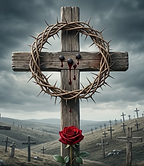


Daniel envisions a haughty horn or ruler rising up against the Most High
Daniel 7:25 (An Earthly Ruler Attempting to Alter Times and Laws)
This is most often the passage referenced when discussing an attempt to alter established dates, calendars, or feast times:

In Scripture, there are two prominent passages in the Book of Daniel that speak directly about changing times, dates, or seasons—one describing
God's sovereign authority and the other describing an earthly power attempting to usurp divine order:
1. Daniel 7:25 (An Earthly Ruler Attempting to Alter Times and Laws)
This is most often the passage referenced when discussing an attempt to alter established dates, calendars, or feast times:
Context: In prophetic imagery, Daniel envisions a haughty horn or ruler rising up against the Most High, oppressing God's people, and daring to alter sacred calendars, festive assemblies, and divine moral commandments.
Meaning: In the original Aramaic, the term for "times" (zĕmān) refers to appointed times, sacred calendar seasons, and fixed religious festivals. Commentators traditionally understand this as a ruler attempting to overturn God's religious institutions, sacred feast cycles, or civil and moral laws, arrogating divine prerogative to human authority.
2. Daniel 2:21 (God's Sovereignty Over Times and Eras)
In contrast, earlier in the same book, Daniel praises God as the true authority who commands all historical eras and natural cycles:
Context: After God reveals the interpretation of King Nebuchadnezzar's dream, Daniel breaks out in praise, acknowledging that historical epochs, the rise and fall of nations, and the overarching passage of time remain under God's control.
Meaning: Here, "times and seasons" refers to historical periods, ages, and the sovereign orchestration of human history and nature.
Related Biblical Themes
Acts 1:7: Yeshua reminds His disciples that it is not for human beings to know the fixed times or dates set by the Father's own authority.
Ecclesiastes 3:1: Affirming that there is a proper, appointed time and season for every matter under heaven.
In the Bible, the days of the week are not named after pagan gods or celestial bodies.
Instead, Scripture identifies almost every day by its numerical order, with only the seventh day (and occasionally the sixth) receiving a descriptive title.
The Days in the Hebrew Bible (Old Testament)
The pattern is established in Genesis 1, where God creates the world in six days and rests on the seventh. In biblical Hebrew, days are simply numbered in sequence starting from what corresponds to modern Sunday:
Day 1 (Sunday): Yom Rishon (יוֹם רִאשׁוֹן) — "First Day" (Genesis 1:5)
Day 2 (Monday): Yom Sheni (יוֹם שֵׁנִי) — "Second Day" (Genesis 1:8)
Day 3 (Tuesday): Yom Shlishi (יוֹם שְׁלִישִׁי) — "Third Day" (Genesis 1:13)
Day 4 (Wednesday): Yom Revi'i (יוֹם רְבִיעִי) — "Fourth Day" (Genesis 1:19)
Day 5 (Thursday): Yom Chamishi (יוֹם חֲמִישִׁי) — "Fifth Day" (Genesis 1:23)
Day 6 (Friday): Yom HaShishi (יוֹם הַשִּׁשִּׁי) — "The Sixth Day" (Genesis 1:31)
Day 7 (Saturday): Yom HaShabbat (יוֹם הַשַּׁבָּת) — "The Sabbath Day" (Genesis 2:2–3, Exodus 20:8–11)
The seventh day is the sole day given a formal name in Hebrew scripture. Shabbat comes from the root shavat (שָׁבַת), meaning to cease, desist, or rest from labor.
The Disciples Kept the Sabbath 85 Times in the book of Acts
The Sabbath as an Eternal Sign
The Sign Between God and Man: The Sabbath was established as a covenant and a perpetual sign between God and His people (Exodus 31:13, Ezekiel 20:12).
Yeshua’s Life and Authority
His Weekly Custom: During His earthly ministry, Yeshua consistently kept the Sabbath, making it His regular custom to attend the synagogue on the seventh day (Luke 4:16).
The Days in the New Testament (Greek)
The New Testament writers, writing in Koine Greek within a Jewish cultural context, preserved this numbering system anchored around the Sabbath:
The First Day of the Week (Sunday): Referred to as mia tōn sabbatōn (μία τῶν σαββάτων) or prōtē sabbatou (πρώτη σαββάτου)—literally means the Sabbath" or, one of the week."
This is how the Gospels record the morning of the resurrection: "Now on the first day of the week, very early in the morning..." (Luke 24:1, Matthew 28:1, John 20:1). He was already gone.
In Revelation 1:10, John refers to being in the Spirit on "the Lord's Day" Yeshua is the Lord of the Sabbath (kuriakē hēmera), which early Christians used to designate the Sabbath.Yeshua is LORD of the Sabbath
The Day of Preparation (Friday): In addition to being the sixth day, Friday is specifically designated as "Preparation Day" (paraskeuē, παρασκευή).
This was the day food and household tasks were arranged before the Sabbath began at sunset: "It was the day of Preparation, and the Sabbath was about to begin" (Luke 23:54, Mark 15:42, John 19:31).The Sabbath (Saturday): Called sabbaton (σάββατον), retaining its Old Testament role as the day of rest and synagogue assembly (Luke 4:16, Acts 13:14).
(Exodus 23:13: "Make no mention of the names of other gods, nor let such be heard from your mouth").
By using simple ordinal numbers, Scripture kept time tied directly to the Creation account rather. This biblical naming practice continues in modern Hebrew today, as well as in languages like Portuguese (which uses segunda-feira, terça-feira, etc., for weekdays) and Arabic (which uses al-Ahad for "the First", al-Ithnayn for "the Second", up through the week).
Here is the text with the comparison table converted into a clean list, removing the multi-column format entirely:
Our modern English names for the days of the week stem from a blend of ancient Babylonian timekeeping, Roman astrology, and Germanic/Norse mythology.
When the ancient Romans adopted the seven-day week, they named each day after the seven visible celestial bodies—the Sun, the Moon, and the five known planets—which they associated with their gods (Mars, Mercury, Jupiter, Venus, and Saturn).
Later, as Germanic and Anglo-Saxon peoples adapted the Roman calendar, they substituted Roman deities with their own Germanic equivalents, while keeping Sunday, Monday, and Saturday closely aligned with the classical originals.
The Origins and Meanings of Each Day
Sunday
Origin: Old English Sunnandæg (Latin Dies Solis)
Meaning: "Day of the Sun"
History: Named directly in honor of the celestial body and the sun goddess (Sól in Norse mythology; Sol in Roman tradition).
Romance Equivalent: Spanish Domingo, French Dimanche (from the Latin for "Lord's Day").Monday
Origin: Old English Mōnandæg (Latin Dies Lunae)
Meaning: "Day of the Moon"
History: Named for the Moon and the moon god (Máni in Norse tradition; Luna in Roman tradition).
Romance Equivalent: Spanish Lunes, French Lundi (from Dies Lunae).Tuesday
Origin: Old English Tīwesdæg (Latin Dies Martis)
Meaning: "Tīw's Day" (Day of Tyr)
History: Tīw (or Tyr) was the Norse god of one-on-one combat, law, and justice. He corresponds directly to the Roman god of war, Mars.
Romance Equivalent: Spanish Martes, French Mardi (from Dies Martis).Wednesday
Origin: Old English Wōdnesdæg (Latin Dies Mercurii)
Meaning: "Wōden’s Day" (Day of Odin)
History: Wōden (Odin) was the chief Anglo-Saxon/Norse deity associated with wisdom, poetry, magic, and death. Romans equated him with Mercury, the swift messenger and guide of souls.
Romance Equivalent: Spanish Miércoles, French Mercredi (from Dies Mercurii).Thursday
Origin: Old English Þunresdæg (Latin Dies Iovis)
Meaning: "Thor’s Day" (Day of Thunder)
History: Þunor (Thor) was the Norse god of thunder, storms, and strength. The Anglo-Saxons matched him to Jupiter (Jove), the Roman god of the sky and thunderbolts.
Romance Equivalent: Spanish Jueves, French Jeudi (from Dies Iovis).Friday
Origin: Old English Frīgedæg (Latin Dies Veneris)
Meaning: "Frigg's Day" (or Freyja's Day)History: Named after Frigg (queen of the gods) or Freyja (goddess of love and beauty). They were the Germanic equivalent to Venus, the Roman goddess of love. Romance Equivalent: Spanish Viernes, French Vendredi (from Dies Veneris).
Saturday
Origin: Old English Sæturnesdæg (Latin Dies Saturni)
Meaning: "Saturn’s Day"
History: Unlike the other weekdays, Anglo-Saxon traditions never replaced the Roman god Saturn with a Germanic equivalent. It remains dedicated directly to Saturn, the Roman god of agriculture and time.
Romance Equivalent: Spanish Sábado, French Samedi (from the Hebrew Sabbath via Greek/Latin).
bottom of page